



Redefining Creative Excellence
Redefining Creative Excellence
Redefining Creative Excellence
Redefining Creative Excellence
Redefining Creative Excellence
Redefining Creative Excellence
If you didn’t find the products you are interested in or have questions?
Partnering with us means working closely with a dedicated team committed to understanding your unique business goals and crafting a digital strategy that aligns with your vision.
Send us your contact email and we will contact you.
Redefining Creative Excellence
Redefining Creative Excellence
Redefining Creative Excellence
Redefining Creative Excellence
Redefining Creative Excellence
Redefining Creative Excellence
If you didn’t find the products you are interested in or have questions?
© 2024 — NAAS Digital. All right reserved.
Privacy Policy
Insights
Insights
Insights
Insights
Insights
Insights
Insights
Insights
Insights
Insights
Just Make It Viral:
The Risk of Chasing Trends Without Purpose
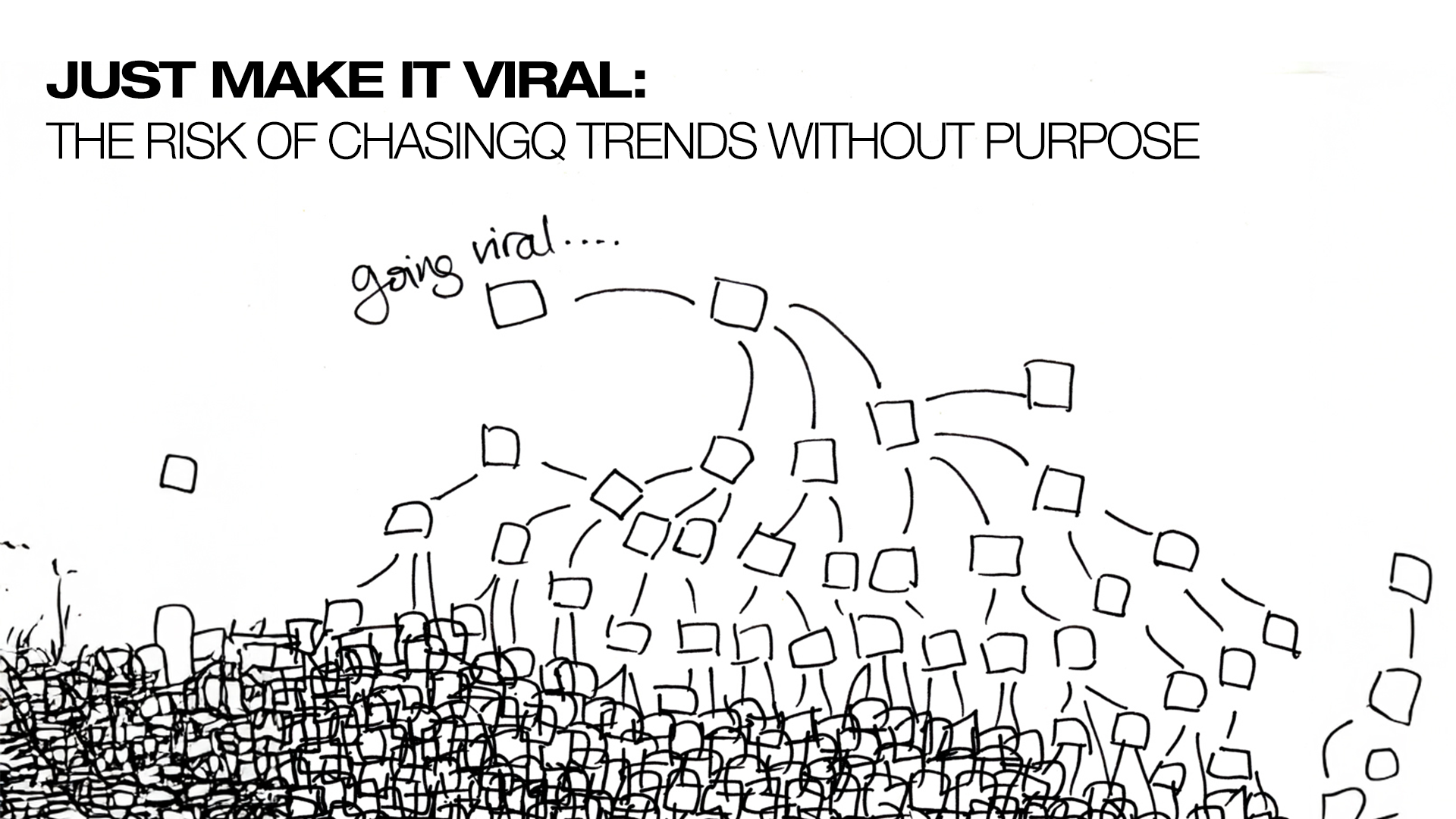
In today’s fast-paced digital landscape, trends move faster than strategy. Marketing teams are constantly under pressure to react, adapt, and capitalize on what is currently gaining attention. The idea of “going viral” has become a benchmark of success, often prioritized over consistency, clarity, and long-term brand positioning.
But here is the reality: virality without purpose rarely translates into value.
While a viral post can generate spikes in visibility, it does not guarantee brand growth, trust, or conversion. In many cases, it creates noise rather than impact.
The Psychology Behind Viral Content
Viral content thrives on emotion. It is designed to trigger quick reactions such as surprise, humor, or relatability. These emotional triggers encourage sharing, which is why trends spread rapidly.
However, what makes content shareable is not always what makes it valuable for a brand. There is a clear difference between content that entertains and content that builds positioning.
The Hidden Risk of Trend-Chasing
When brands chase trends without a clear purpose, several risks emerge:
- Loss of Brand Identity
Jumping between unrelated trends can dilute your brand voice. Over time, audiences struggle to understand what your brand stands for. - Short-Term Attention, No Long-Term Value
Viral spikes often disappear as quickly as they appear. Without a strategic foundation, there is no lasting impact. - Audience Misalignment
Not every trend resonates with your target audience. Participating in the wrong trend can attract the wrong attention. - Resource Misallocation
Creating trend-based content requires time and effort. Without measurable outcomes, this becomes inefficient.
Strategic Content vs Reactive Content
Reactive content responds to trends. Strategic content builds direction.
The strongest brands use trends selectively. They do not follow every trend. Instead, they ask:
– Does this align with our brand identity?
– Does this serve our audience?
– Does this support our objectives?
If the answer is no, they do not participate.
When Trends Actually Work
Trends can be powerful when used correctly. The key is alignment.
A trend works when it:
– Reinforces your brand message
– Connects with your audience
– Adds value beyond entertainment
In these cases, virality becomes a byproduct of strategy, not the goal itself.
Building a Trend Framework
Instead of reacting randomly, brands should evaluate trends using a simple framework:
– Relevance: Does this fit our brand and audience?
– Timing: Can we execute quickly without compromising quality?
– Objective: What outcome are we aiming for?
– Longevity: Will this contribute to long-term positioning?
This approach transforms trend participation from reactive to strategic.
How NAAS Digital can help?
At NAAS Digital, we help brands move from reactive content to strategic content systems.
Our approach includes:
- Evaluating trends based on business objectives
- Aligning content with brand positioning
- Creating content calendars that balance relevance and consistency
- Measuring impact beyond engagement metrics
We ensure that every piece of content contributes to a larger strategic goal, not just short-term visibility.
Conclusion
Going viral is not a strategy. It is an outcome that may or may not happen.
Brands that focus only on trends risk becoming inconsistent, forgettable, and misaligned with their audience.
The real advantage comes from clarity, consistency, and purpose.
In a world driven by constant change, the brands that win are not the ones that follow every trend, but the ones that know when not to.