



Redefining Creative Excellence
Redefining Creative Excellence
Redefining Creative Excellence
Redefining Creative Excellence
Redefining Creative Excellence
Redefining Creative Excellence
Are you ready to think ahead and explore new possibilities for your business's digital future?
Partnering with us means working closely with a dedicated team committed to understanding your unique business goals and crafting a digital strategy that aligns with your vision.
Send us your contact email and we will contact you.
Redefining Creative Excellence
Redefining Creative Excellence
Redefining Creative Excellence
Redefining Creative Excellence
Redefining Creative Excellence
Redefining Creative Excellence
Are you ready to think ahead and explore new possibilities for your business's digital future?
© 2024 — NAAS Digital. All right reserved.
Privacy Policy
Insights
Insights
Insights
Insights
Insights
Insights
Insights
Insights
Insights
Insights
Getting Your Website Found in the Age of AI Search
The 2025 Complete Guide to Visibility on ChatGPT, Gemini, Grok, and Perplexity
Search is no longer defined by a list of blue links. By the end of 2025 millions of people in the Middle East and around the world are asking AI assistants like ChatGPT, Google Gemini, Perplexity, and X’s Grok to find information, compare products, and even recommend services.
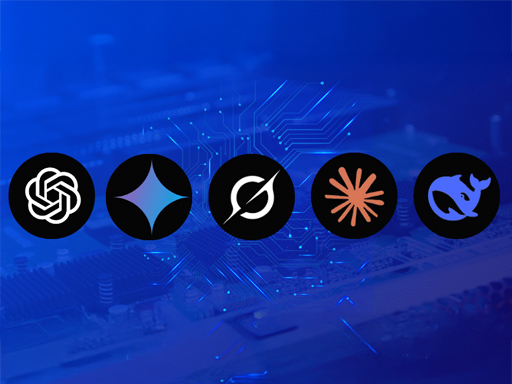
These platforms don’t just index keywords. They read websites, understand context, and deliver conversational answers.
If your business depends on being discovered online, the question is no longer “How do I rank on Google?” but “How do I become part of the knowledge these AI systems draw from?”
This guide explains exactly how to prepare, drawing on NAAS Digital’s experience helping brands across the UAE, Saudi Arabia, and the wider MENA region succeed in this new landscape.
1. Understanding AI Indexing
Traditional SEO is built around keywords, backlinks, and ranking algorithms. AI indexing is different:
- Language models continuously crawl, interpret, and summarize web content.
- They select information based on clarity, authority, and context, not just keyword density.
- Some like Perplexity perform live searches every time a user asks a question, while others like ChatGPT combine static training data with selective real-time browsing.
How the Major Players Work
ChatGPT (OpenAI)
Now offers real-time browsing for subscribers. It blends a large historic dataset with current data from trusted sources.
Google Gemini
Combines Google Search infrastructure with DeepMind’s advanced AI. Expect Gemini to use Google’s Knowledge Graph and reward structured, entity-linked content.
Perplexity
Functions like an AI search engine with its own crawler (PerplexityBot). It actively pulls the newest information and cites sources.
Grok (X/Twitter)
Draws from the fast-moving X platform and offers both a “Fun” and “Regular” mode. It provides real-time answers and can even interpret images.
For brands in the Middle East where government AI strategies and mobile-first consumers lead global trends, appearing in these systems means greater reach, credibility, and customer trust.
2. Preparing Your Website: Foundations First
Technical Accessibility
- Use HTTPS, clean URL structures, and ensure mobile responsiveness to satisfy Google Core Web Vitals.
- Submit updated XML sitemaps to Google Search Console and Bing Webmaster Tools.
- Confirm that important pages are open to reputable crawlers such as Common Crawl and PerplexityBot.
Tip from NAAS Digital: We run full-site audits to identify crawl issues and fix them before AI bots encounter them.
Performance & User Experience
AI platforms value speed and usability because those factors influence user trust.
- Optimize images and scripts for faster loading.
- Ensure accessibility compliance (WCAG standards), which also helps language models parse content.
3. Creating Content AI Wants to Quote
Write for Questions, Not Just Keywords
AI assistants surface clear, answer-oriented content. Create pages that:
- Anticipate customer questions (“How do I…?”, “What’s the best…?”).
- Use natural, conversational language.
- Provide concise summaries and detailed explanations.
Show Authority
- Publish long-form resources, guides, and whitepapers, AI models value depth.
- Use natural, conversational language.
Keep It Fresh
AI retrains regularly. Update statistics, refresh case studies, and review evergreen pages so answers remain current.
4. Structured Data & Knowledge Graph Alignment
Structured data is the bridge between your site and AI systems.
- Implement schema markup for FAQs, articles, products, reviews, and events.
- Link content to recognised entities (people, places, products) so Google’s Knowledge Graph, and by extension Gemini understands your brand.
NAAS Digital Advantage: Our developers integrate and validate schema across large, multilingual sites to maximize discoverability.
5. Building Authority Beyond Your Site
AI models look for trust signals across the web.
- High-quality backlinks from respected domains increase credibility.
- Consistent brand mentions in news outlets, industry directories, and social platforms reinforce authority.
- Positive customer reviews on third-party sites feed additional trust into AI systems.
6. Platform-Specific Tips
ChatGPT
- Make sure content is informative and naturally written, as OpenAI uses Common Crawl and similar datasets.
- Keep an eye on OpenAI updates, its real-time browsing will expand and new submission methods may appear.
Perplexity
- Create concise, Q&A-style sections; Perplexity aims to answer questions quickly.
- Ensure robots.txt allows Perplexity Bot.
- Maintain strong page speed for mobile.
Google Gemini
- Prioritize Google Core Web Vitals, mobile-first design, and entity-based SEO.
- Use structured data extensively to feed Google’s Knowledge Graph.
- Focus on clear, answer-ready content, Gemini will favor pages that respond directly to user queries.
Grok (X/Twitter)
- Because Grok draws heavily from real-time X content, maintain an active, authoritative presence on X.
- Cross-link key website resources in your X posts to create a rich data trail.
7. Managing Risks: Privacy & Control
- Permanent Data Use: Once AI models ingest public content, it may remain in training datasets indefinitely, even if you later remove it.
- Privacy Laws: Comply with UAE PDPL, GDPR, and other regional regulations. Only publish data you’re comfortable being reused.
- Content Accuracy: Outdated or incorrect information can damage credibility when quoted by AI.
NAAS Digital offers content governance frameworks to help businesses decide what should remain public and how to protect sensitive data.
8. Future Outlook
AI-driven discovery is accelerating:
- Governments across the GCC are investing billions in AI infrastructure.
- Consumers increasingly ask AI first before visiting a search engine.
- Generative search traffic, according to SEMrush data from late 2025, already represents a measurable percentage of referral visits for forward-thinking brands.
Being proactive now isn’t optional, it’s the path to sustained visibility.
How NAAS Digital Puts You Ahead
Optimising for AI search requires a mix of technical expertise, content strategy, and continuous monitoring.
NAAS Digital provides all three:
- AI Search Audit & Roadmap: We identify gaps in technical SEO, content, and structured data specifically for AI indexing.
- Content Strategy & Creation: Our writers craft Q&A-driven, authoritative content designed to be quoted by AI assistants.
- Schema & Knowledge Graph Integration: We implement advanced markup to help platforms like Gemini instantly understand your brand.
- Monitoring & Analytics: We track traditional SEO and emerging AI-referral traffic so you see measurable ROI.
Whether you’re a startup in Dubai or a regional enterprise expanding across the GCC, NAAS Digital ensures your website stays discoverable wherever your customers are asking questions, from Google to ChatGPT and beyond.
Contact us today to start your AI Search Optimization journey.
NAAS Insights
We often help teams set up content taxonomies within their calendars—each post is labeled by type and goal. This helps stakeholders understand why some posts look “boring” and why that’s sometimes the point. It also ensures the right analytics are being tracked for the right reasons.