

Redefining Creative Excellence
Redefining Creative Excellence
Redefining Creative Excellence
Redefining Creative Excellence
Redefining Creative Excellence
Redefining Creative Excellence
If you didn’t find the products you are interested in or have questions?
Partnering with us means working closely with a dedicated team committed to understanding your unique business goals and crafting a digital strategy that aligns with your vision.
Send us your contact email and we will contact you.
Redefining Creative Excellence
Redefining Creative Excellence
Redefining Creative Excellence
Redefining Creative Excellence
Redefining Creative Excellence
Redefining Creative Excellence
If you didn’t find the products you are interested in or have questions?
© 2024 — NAAS Digital. All right reserved.
Privacy Policy
Insights
Insights
Insights
Insights
Insights
Insights
Insights
Insights
Insights
Insights
The Silent Stakeholder:
When Everyone Has a Say in Social Media
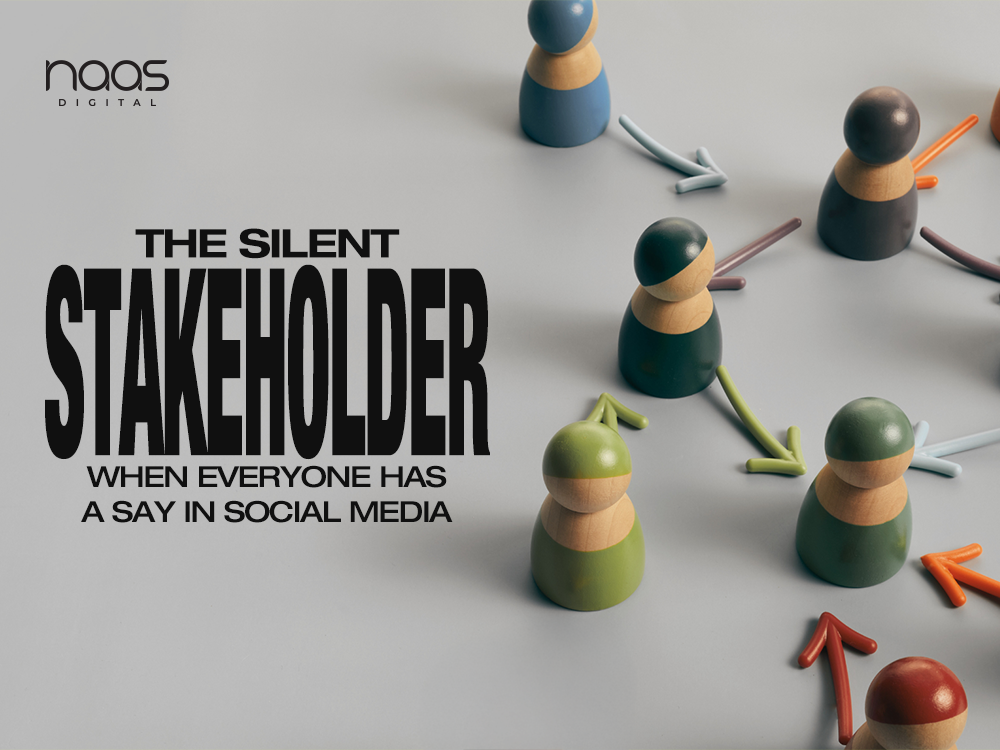
Social media often looks simple from the outside. A post goes live, an audience responds, and the brand stays visible. Behind the scenes, however, many organizations deal with a complicated approval environment where every department has an opinion.
Legal wants softer wording. PR wants to adjust the message. Leadership wants more brand presence. Operations wants technical accuracy. By the time the post is approved, the moment may have passed.
This is the silent stakeholder problem. It happens when too many voices influence content, but ownership and decision-making are unclear.
Why Social Media Attracts So Many Stakeholders
Social media is public, fast-moving, and highly visible. That naturally makes internal teams cautious. Unlike a private email or internal document, a social post represents the brand in front of customers, partners, media, and competitors.
Stakeholder input can be valuable, especially in regulated industries or large organizations. The challenge begins when every input carries equal weight and no one owns the final decision.
The Cost of Too Many Opinions
When social media content is reviewed by too many people, several problems appear.
The message becomes diluted
A clear message can quickly become generic when too many edits are added. The post may become technically safe but emotionally flat.
Timeliness is lost
Social media depends on timing. A delayed post can miss the conversation entirely.
The brand voice weakens
When different teams rewrite content without a shared tone of voice, the brand becomes inconsistent.
The social media team loses ownership
Content teams become coordinators of feedback instead of strategic communicators.
Governance Without Bottlenecks
Strong social media governance does not mean giving everyone approval rights. It means defining who contributes, who reviews, and who decides.
A useful model includes:
- contributors who provide information
- reviewers who check risk or accuracy
- approvers who make final decisions
- informed stakeholders who receive visibility but do not edit
This gives structure without turning every post into a committee project.
How to Build a Better Approval System
Define content risk levels
Not every post needs the same approval process. A major announcement may need leadership and legal review, while a low-risk educational post may only need brand review.
Assign a content owner
Every post should have one owner responsible for managing input and making the final recommendation.
Create pre-approved frameworks
Common content types, such as event posts, service highlights, awareness days, and thought leadership, can follow approved templates.
Educate internal stakeholders
Stakeholders need to understand platform behavior, timing, tone, and audience expectations.
How NAAS Digital can help?
NAAS Digital helps organizations build practical content workflows that balance control with agility. We map stakeholders, define approval roles, create content governance systems, and help internal teams protect brand quality without slowing execution.
Our approach focuses on clarity, ownership, and speed, because effective social media requires both strategic alignment and platform fluency.
Conclusion
Stakeholder involvement is not the problem. Unstructured involvement is. When organizations clarify roles, assign ownership, and build smart approval systems, social media becomes faster, sharper, and more effective.
The strongest content is not created by removing stakeholders. It is created by giving them the right role at the right time.
If your organization needs a smoother social media approval process, NAAS Digital can help you design workflows that protect brand quality while keeping your content timely and relevant.